
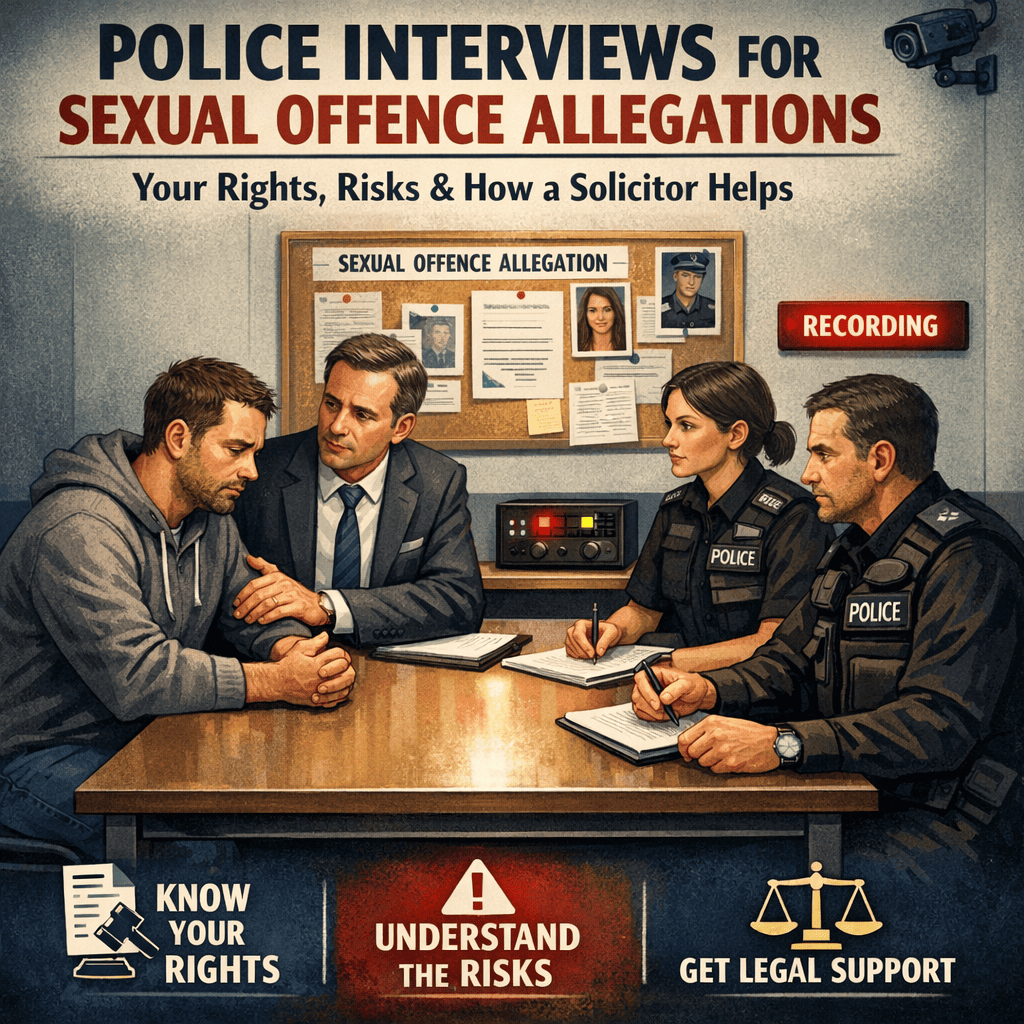
Being asked to attend a police interview—whether by arrest or a so‑called “voluntary” invitation—can be intimidating, especially where sexual offence allegations are involved. What happens in that interview can significantly affect the investigation's direction and any future court proceedings.
This guide explains how police interviews work in England and Wales, your legal rights under PACE, the common risks, and why specialist legal advice before and during an interview is critical.
“Voluntary” interview vs arrest: what’s the difference?
Police may request that you attend a voluntary interview or arrest you. In practice, the legal consequences of the interview itself are the same:
- The interview is normally conducted under caution
- It is audio and/or video recorded
- Anything you say can be used in evidence
Key point:
A voluntary interview is not informal. You still have the right to free legal representation, and declining a solicitor puts you at risk.
If the allegation relates to sexual offences, it’s essential to speak to a specialist sexual offence defence solicitor before agreeing to any interview.
Your legal rights in a police interview (PACE)
Police interviews are governed by the Police and Criminal Evidence Act 1984 (PACE) and its Codes of Practice.
You have the right to:
- Free, independent legal advice
- Private consultation with your solicitor
- Know the nature of the allegation
- Take breaks and access medical assistance if needed
- Remain silent, without being forced to answer questions
While silence can sometimes allow an adverse inference to be drawn at trial, whether to answer questions—and how—is a strategic legal decision that depends entirely on the circumstances.
Disclosure before interview: what will the police tell you?
Before the interview, the police should provide a pre‑interview disclosure, but this is often:
- Limited
- High‑level
- Subject to change as investigations continue
In sexual offence cases, disclosure may not include:
- Full witness statements
- Digital evidence
- Contextual or background material
A defence solicitor:
- Reviews what has (and hasn’t) been disclosed
- Identifies gaps or inconsistencies
- Advises on the safest interview approach
Common interview risks in sexual offence allegations
Police interviews present several avoidable dangers, particularly without representation:
Misinterpretation
Stress, confusion, or poorly phrased questions can lead to answers being misunderstood or taken out of context.
Inconsistency
Minor discrepancies—often the result of anxiety—can later be framed as credibility issues.
Over‑explanation
Trying to “clear things up” without knowing the evidence can unintentionally strengthen the prosecution's case.
Digital Evidence Traps
Police may question you about messages or images you haven’t seen. Commenting without preparation is risky.
This is why early specialist advice matters so much.
Interview strategies: silence, answers, or a prepared statement?
There is no one‑size‑fits‑all approach. A defence solicitor may advise:
- Answering questions fully and carefully
- Providing a prepared statement setting out your account without cross‑examination
- Remaining silent where disclosure is inadequate or risks outweigh benefits
The decision depends on:
- The evidence disclosed
- The nature of the allegation
- Your personal circumstances
- Whether further evidence is likely to emerge
A specialist lawyer ensures the approach protects your position now and later in court.
After the interview: what happens next?
After the interview, police may:
- Release you without charge
- Place you on bail (with or without conditions)
- Release you under investigation (RUI)
Sexual offence investigations often take months, especially where:
- Digital devices are examined
- Third‑party records are requested
- CPS charging advice is sought
Your solicitor can:
- Manage and challenge bail conditions
- Chase progress during lengthy investigations
- Submit pre‑charge representations arguing for no further action
Why specialist representation is crucial in sexual allegation interviews
Sexual offence cases are handled differently from many other criminal matters. They involve:
- Sensitive complainant evidence
- Strict CPS charging standards
- Detailed consideration of consent, reliability, and context
- Significant reputational and personal consequences
A specialist sexual offence defence solicitor:
- Understands how police and CPS approach these cases
- Knows what evidence matters most
- Protects your rights from the very first interaction
What to do if the police contact you about an interview
If police contact you—by phone, email, or letter:
- Do not attend without legal advice
- Do not discuss the allegation with anyone else
- Preserve all messages and digital material
- Contact a specialist criminal defence solicitor immediately
Early advice can prevent mistakes that are impossible to undo later.
Speak to a specialist sexual offence defence solicitor
If you are facing a police interview related to a sexual allegation, speaking to a specialist defence lawyer before the interview is one of the most important steps you can take.
An experienced solicitor can:
- Prepare you thoroughly
- Attend and advise during interview
- Protect your legal position
- Push for the right outcome at the earliest stage