
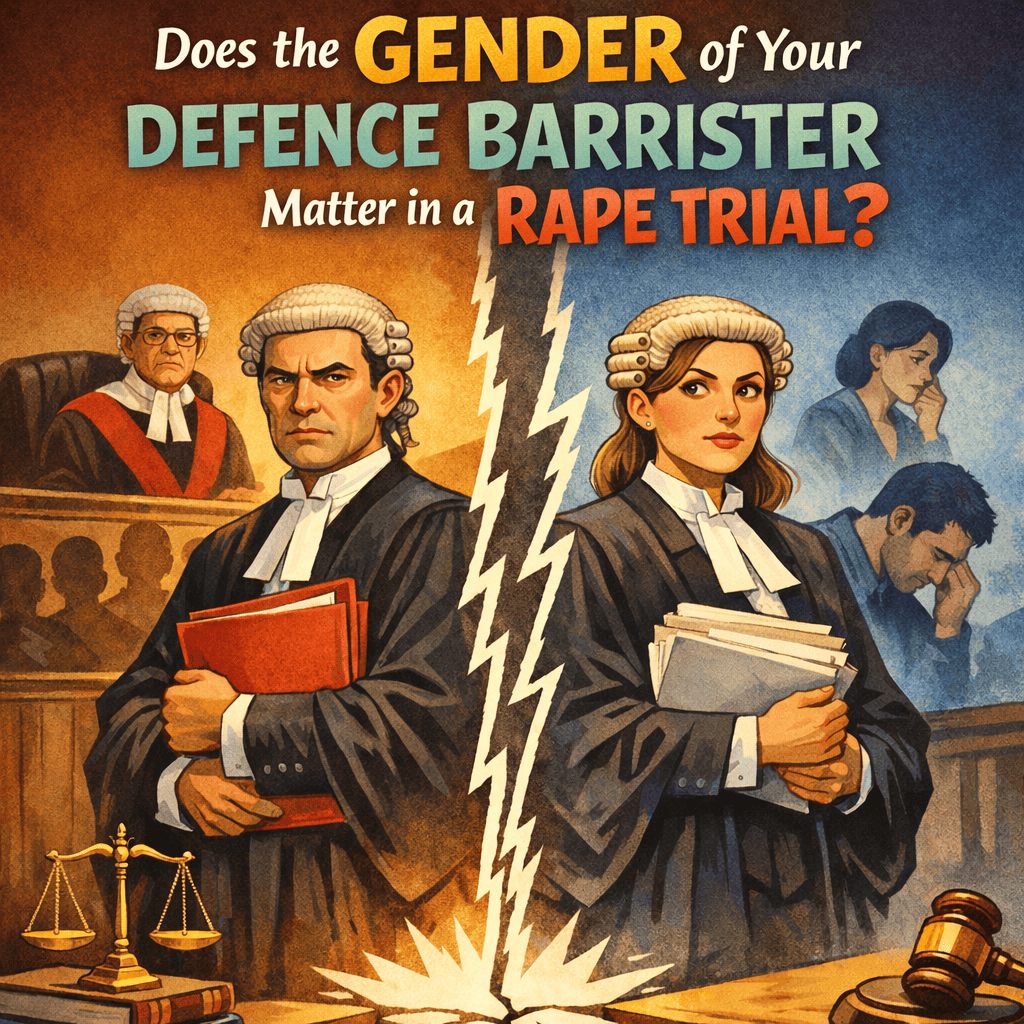
When facing a serious allegation such as rape, every aspect of your defence matters. One question that often arises is whether the gender of your defence barrister can influence the outcome of a rape trial. It’s a fair and important question—especially in cases involving sensitive allegations and emotionally charged evidence.
Why this question matters
In rape and sexual offence trials, the defence barrister plays a critical role in presenting your case, cross-examining the complainant, and addressing the jury. Some clients and solicitors believe that instructing a female defence barrister may be advantageous, particularly when the complainant is also female. The reasoning is that a woman cross-examining another woman may be perceived as less confrontational or aggressive, potentially softening the jury’s perception of the defence.
What the research says
While jury deliberations in England and Wales are legally protected and confidential, several mock trial studies and academic surveys have explored how jurors respond to male versus female advocates in sexual offence cases. Some findings suggest:
- Perceived credibility: Female barristers may be seen as more trustworthy, especially when defending a man accused of rape. Jurors may think, “If even a woman is arguing his innocence, perhaps he really is innocent.”
- Cross-examination style: Female advocates are sometimes perceived as less aggressive, even when asking the same questions as their male counterparts. This can reduce the risk of jurors viewing the defence as bullying or unfair.
- Juror bias: Some jurors may unconsciously associate authority with male barristers, while others may respond more positively to a female advocate’s tone and approach.
It’s important to note that these effects are not universal. Juror reactions vary based on their own beliefs, experiences, and expectations. Gender dynamics can influence how evidence is received, but they are only one part of a much larger picture.
Real-world experience in the Crown Court
In my own practice as a criminal defence solicitor specialising in rape and sexual offence cases, I’ve worked with both male and female barristers of exceptional calibre. I’ve seen female KCs deliver devastating cross-examinations with calm precision, and male juniors handle sensitive complainant evidence with tact and care.
Ultimately, the most important factor is not gender—it’s advocacy skill, courtroom presence, and experience. That said, if a client feels more comfortable with a female barrister—or believes that a female advocate may be better received by the jury—I will always take that preference seriously and work to accommodate it.
Should you choose a female barrister?
There is no one-size-fits-all answer. The gender of your barrister may influence how the jury perceives your defence, but it is only one of many factors at play. The strength of the evidence, the advocate’s skill, the demeanour of the witnesses, and the composition of the jury all matter.
Some jurors may respond positively to a female barrister’s approach, while others may hold unconscious biases. In some cases, a female advocate pressing a complainant hard in cross-examination may be seen as more credible—or, conversely, may face criticism for being “too tough.” The impact depends on the jurors’ attitudes and the case's overall context.
Final thoughts
If you are facing a rape allegation and are concerned about how your defence team will be perceived in court, I encourage you to raise these concerns early. As a criminal defence solicitor, I work with a trusted network of both male and female barristers and will always recommend the right person for your case—someone who is not only technically excellent but also able to connect with the jury and present your defence with clarity and authority.
Need advice? If you’d like to discuss your case in confidence, including the choice of barrister, get in touch. I’m here to help.